

UNDERSTANDING THE PROBLEM
WHY SHOES?
A Pair of Shoes Can Change a Life.
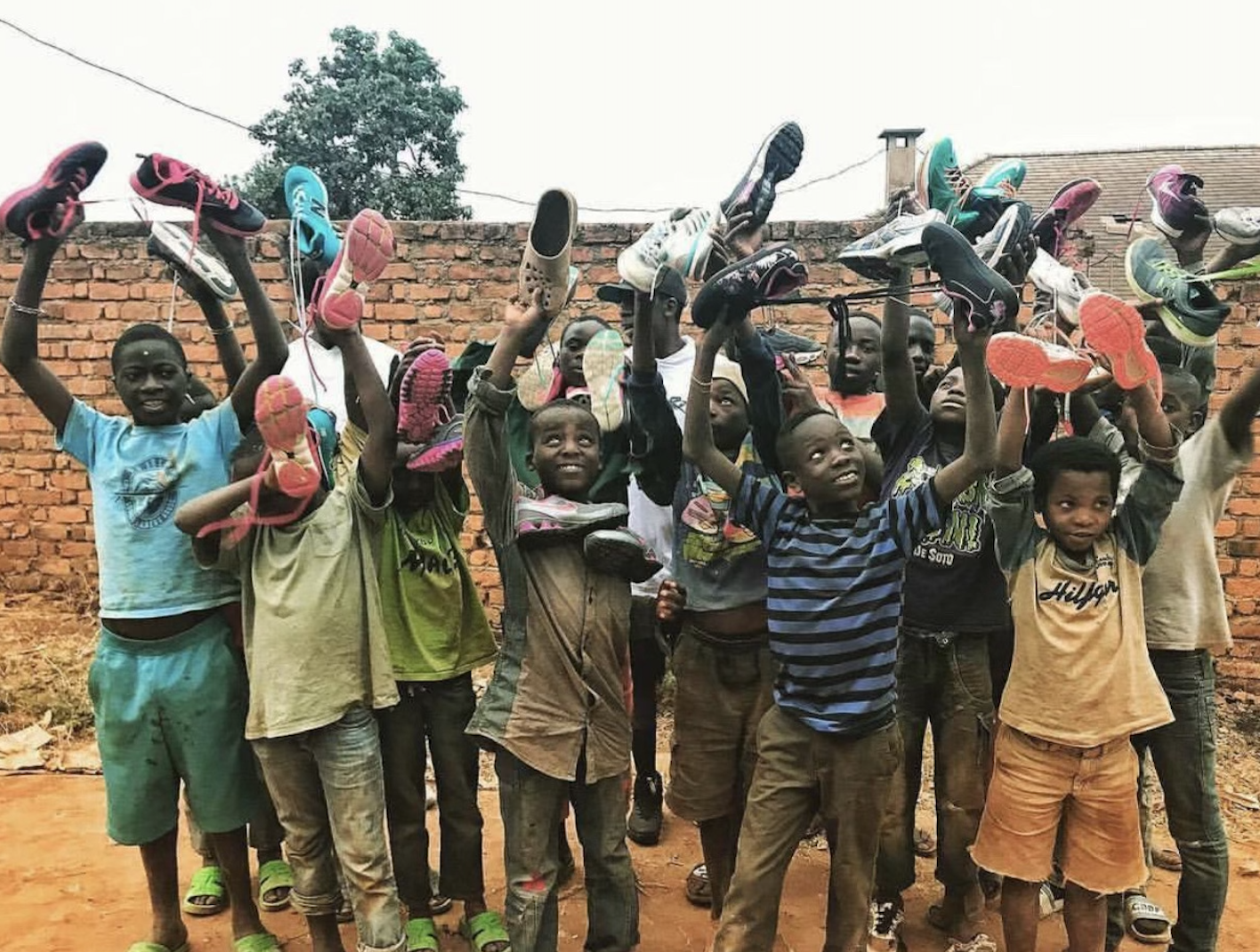
In communities across the Democratic Republic of Congo, many children and families live without adequate footwear.
Walking barefoot can expose vulnerable feet to cuts, injuries, contaminated soil, and parasites such as jiggers.
For a child, a pair of shoes is more than something to wear.
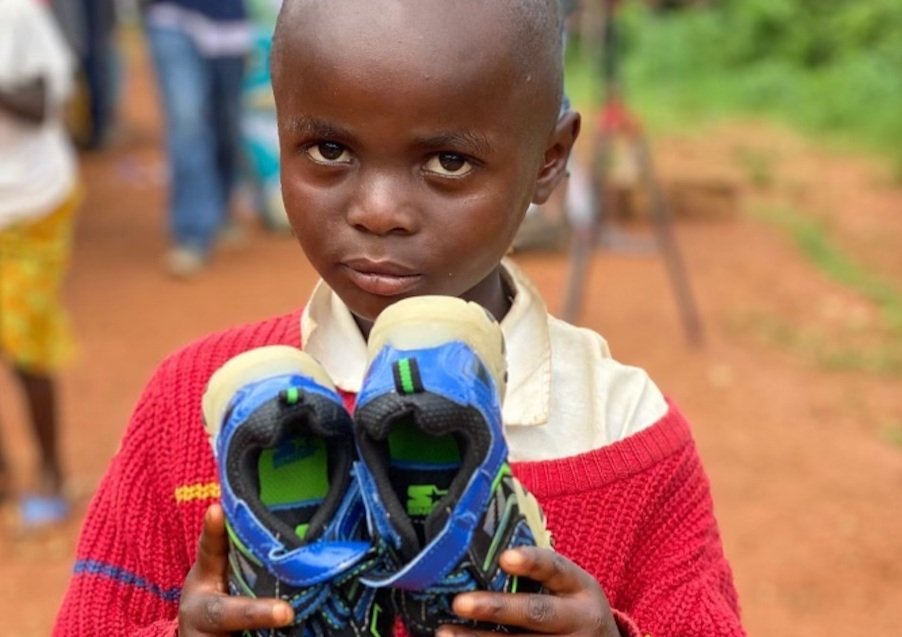
Shoes mean protection. Shoes mean dignity. Shoes can help a child walk to school. Shoes bring joy and hope.
Shoes = Life Saving Protection
Shoes = Access to School
Shoes = Joy & Hope

We believe changing someone’s
life starts with something as
simple as a pair of shoes.
Our foundation has extensive experience responding to crises in eastern Congo. In 2015, we learned that children were dying in these villages because of a lack of proper footwear. Driven by our passion to help these kids live better lives, we launched a campaign in 2017 here in America and collected more than 20,000 pairs of shoes, as well as clothing, for people hurting in these villages. In 2019, with the help of Samaritan’s Purse, we delivered more than 50,000 pairs of shoes, along with clothing and medical supplies. So far, we have delivered more than 150,000 pairs of shoes to people in the DRC.
THE PROBLEMS PEOPLE ARE FACING
Many families in the communities we serve lack access to adequate footwear, increasing the risk of injuries and parasitic infections such as jiggers.
What is Jiggers?
One of the conditions we encounter in the communities we serve is tungiasis, commonly known as jiggers.
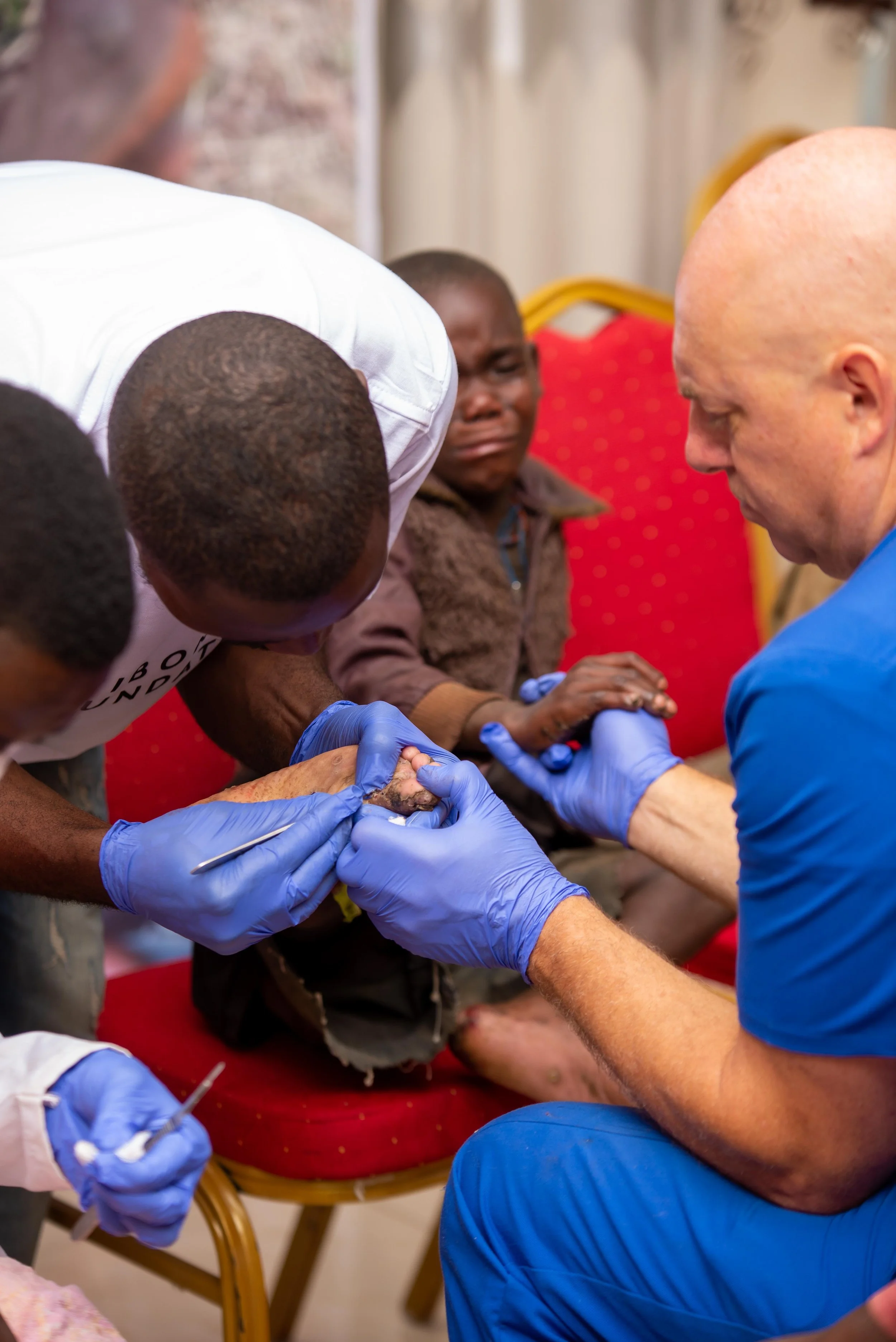
Jiggers are tiny parasitic fleas that can embed themselves in the skin, commonly affecting the feet and toes. For a child suffering from jiggers, simply putting on a pair of shoes is not enough.
Treatment must come first.
What do they do?
It hides in the crevices and cracks found on the floors, walls of dwellings and items like furniture, it feeds on their warm-blooded hosts including man, cats, dogs, rats, pigs, cattle, and sheep. The impregnated female feeds by burrowing into the skin of the host’s skin under the toe or fingernail. Infestations can cause pain, itching, inflammation, wounds, infection, and difficulty walking.
How does it cause diseases?
As the flea continues to feed on the host’s blood, it enlarges and forms a round sack full of eggs with the shape and size of a pea. Within days the jigger swells to over 1,000 times the size it was while continuously laying eggs.
What Can Jiggers lead to?
The results of jigger infestation are pain, itching, and infection. Children stop walking to school. Adults can’t care for their families. The elderly become captive in their homes. Heavy infestation results in toes filled with pus, which may lead to infection, inflammation, ulceration, fibrosis, lymphangitis, gangrene, loss of toenail, amputation of digits, and death.
FROM PERSONAL EXPERIENCE TO PURPOSE
“I Got My First Pair of Shoes When I Was 10 Years Old.”
“I know what it is like to walk miles without shoes. I experienced jiggers myself and know the pain that can come from walking barefoot in communities where the soil can expose vulnerable feet to parasites.
Having a pair of shoes is a big deal.
That experience is one of the reasons this work is so personal to me.”
— Emmanuel Ntibonera Founder, Ntibonera Foundation

A STORY WE WILL NEVER FORGET
During our work in Congo, we learned that a child we had previously encountered had passed away after suffering from a severe jigger infection.
We never forgot him.
His story became part of the reason we knew we had to do more.
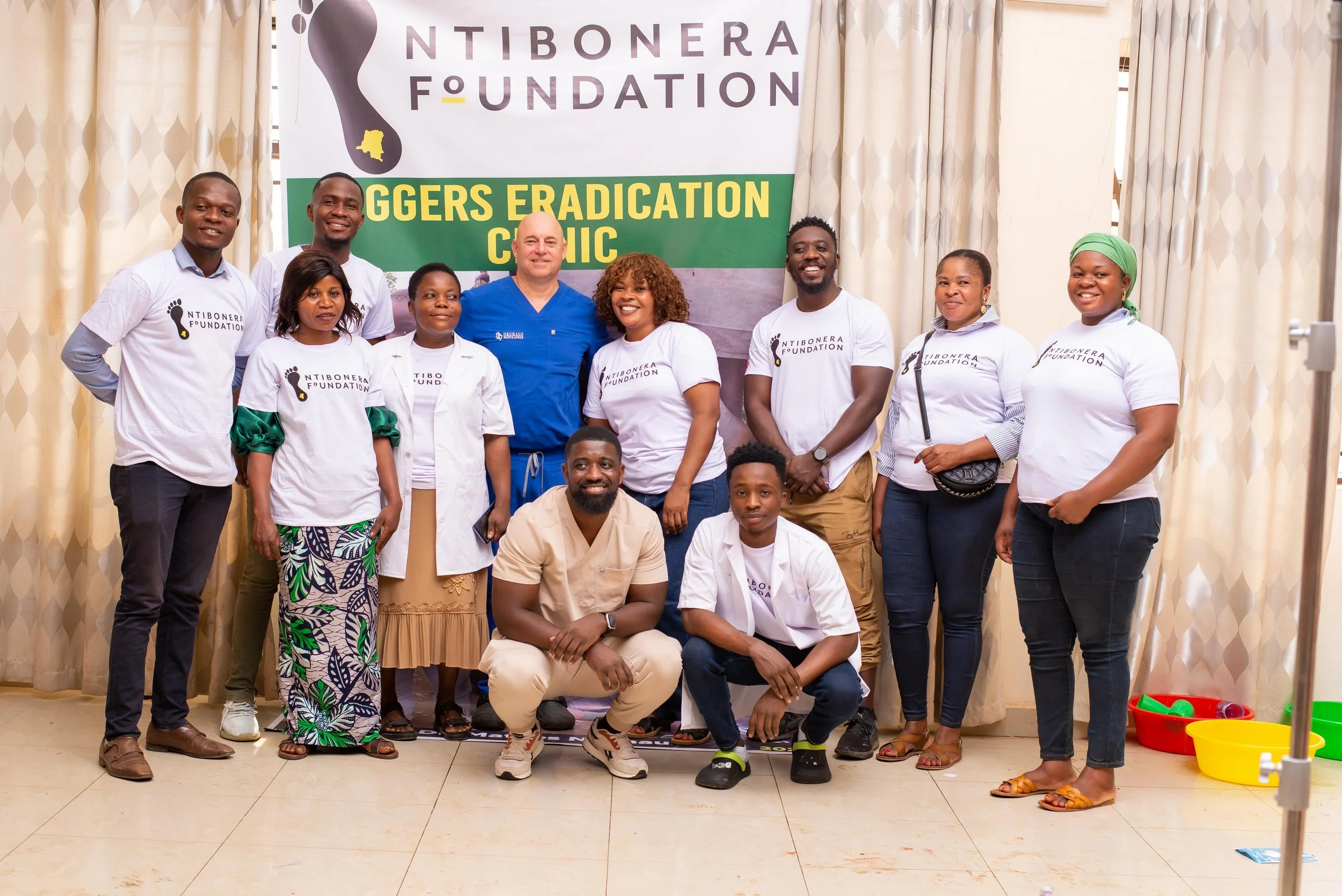
When we later returned to Congo for a jigger medical clinic, one of our priorities was to find his family.
Several members of his household had also suffered from jiggers. We wanted to meet his mother and siblings, hear their story, and help ensure those who still needed care could receive treatment.
Then came a moment we will never forget.
His mother saw our banner.
On it was a photograph of her child.
She began to cry.
Her tears reminded us that behind every photograph is a person.
Behind every number is a name.
Behind every pair of shoes is a story.
This is why we keep going.
TREAT
HEAL
PROTECT
MOVE FORWARD
WHY SHOES MATTER
More Than Something to Wear
PROTECTION
Shoes provide an important physical barrier between vulnerable feet and the ground, helping protect against cuts, injuries, and exposure to certain parasites.
HEALTH
Proper footwear can be one part of protecting feet and supporting healthier communities alongside medical treatment, hygiene, sanitation, environmental measures, and education.
EDUCATION
Painful foot conditions and injuries can make walking difficult. Healthy, protected feet can make it easier for children to participate in everyday life, including getting to school.
DIGNITY
Every child deserves the dignity of being able to walk, play, learn, and participate in their community with confidence.
HOPE
A pair of shoes may seem simple, but to a child who has gone without them, receiving their own pair can be a powerful reminder that they are seen, valued, and loved.
WE DON’T JUST GIVE SHOES
We Provide Medical Treatment.
When we encounter children and families suffering from jigger infestations, our response goes beyond distributing shoes.
Ntibonera Foundation works with medical professionals to provide treatment and care.
Our work includes:
• Identifying and assessing people affected by jiggers
• Providing appropriate medical treatment
• Carefully removing and managing embedded jiggers
• Cleaning and caring for affected areas
• Providing hygiene and prevention education
• Providing shoes after treatment to help protect vulnerable feet
• Connecting individuals with additional medical care when needed
Our goal is not simply to put shoes over a problem.
We want to treat the feet, help protect them, and restore dignity to the person.
1 MILLION PAIRS
FOR PEACE
Help Us Get One Million Pairs of Shoes to Children and Families in
Donate shoes. Help ship them. Change lives.
Shoes Bring Hope

